
Concentration Camps 

When the Nazis took power in Germany in 1933 they began a systematic campaign to eliminate political opposition, which was later expanded to include all the people the party conceived of as “undesirables”. That included Jews, Roma, Sinti, homosexuals, the mentally infirm and others. Toward this end they established about 20,000 concentration camps, where the victims of the regime were subjected to the most brutal treatment. The effort to exterminate the entire Jewish people is called The Holocaust.
Gabriel Wilensky

Life and Death in the Concentration Camps

Living conditions in the German concentration camps was generally appalling, but the Germans definitely made living conditions different depending on the type of inmates imprisoned there. Thus, German political prisoners were treated better than Poles, who in turn were treated better than Jews. The latter were subjected to inhuman treatment. The strongest were selected for forced labor, a role which usually extended their life expectancy by a few months. 

“Certain concentration camps were death factories, built as special-purpose extermination camps where the victims were selected for extermination on arrival.”
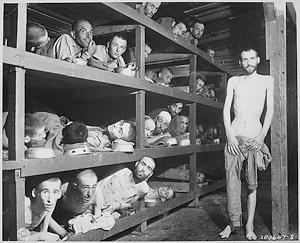
Certain concentration camps were death factories, built as special-purpose extermination camps where the victims were selected for extermination on arrival. All the death camps were located in Poland. They were Belzec, Majdanek, Chelmno, Treblinka, Sobibor and Auschwitz-Birkenau. Of those, Auschwitz-Birkenau was the largest and deadliest of the 20,000 concentration camps established by the Germans during World War II. Millions of Jews were murdered in these concentration camps, mostly in gas chambers, but many died of starvation, disease, brutal treatment, exposure, executions and “medical” experiments.

Want to stay informed about the topic?
Subscribe below.

14 + 3 =

Hitler’s Aides: Willing Collaborators in the Extermination of Jews

The Warsaw Ghetto was one of the many ghettos the Germans established in various European cities. The ghettos were created with the…

The Holocaust

The Holocaust can be a perplexing event. After all, what could have possibly motivated and driven so many people to commit such atrocious acts, and in such numbers, as those committed…

Was Pope Pius XII a Saint?

The German-born pope, Benedict XVI, is moving full steam ahead in the process of canonization of the germanophile war-time pope, Pius XII. Having declared Pius XII…

How did the Holocaust start?

The Holocaust started gradually. Centuries of ingrained theological anti-Judaism led to racial antisemitism, which resulted in the desire to eliminate the Jews from…

The Fear to Act on Behalf of the Jews: Making the Situation Worse – Really?

Pope Pius XII and the Catholic Church, and the cohorts of church apologists today, often argued that the pope had to…

Silence Implies Approval

Often, religious people cling to their religion because it provides them with solace and succor during times of despair or hardship. Many times religious people go to their…

Aiming at the Heart of the Arab/Israeli Conflict

The basis of the antagonism in the Arab/Israeli conflict is ultimately the Arabs’ seeming inability to accept even a minuscule Jewish state among a…

Did Pope Pius XII Save the Jews of Rome? Using Tactical Lies

A recent article on Zenit, written by Gary Krupp from Pave the Way Foundation, describes how Pope Pius XII’s supposed strategy of…

To Recognize Or Not to Recognize Israel: That is the Question

When it comes to the issue of Vatican non-recognition for the State of Israel, apologists for the actions—or lack thereof—of Pope Pius…

Who Knew What, When? Ordinary Germans and the Holocaust

Defenders of the Church are fond of repeating the already debunked post-WWII myth that nobody knew of the atrocities back home, that the…